Smart Hiking Nutrition for Seniors: Fuel, Hydrate, Thrive
Practical fueling, hydration, and recovery strategies for adults 60+ to hike longer, safer, and with more energy.
Build the Foundation: Everyday Fuel for Strong Hikes
Hiking nutrition for seniors starts at home
Great days on the trail are built in the kitchen, and hiking nutrition for seniors begins with consistent, balanced meals. Your body recovers more slowly with age, so reliable protein, quality carbs, and healthy fats prime your muscles and joints for steady miles. Prioritizing whole foods also stabilizes blood sugar, which keeps energy even and reduces dizziness on climbs. Think of daily eating as training fuel rather than a diet; the goal is stamina, comfort, and joint protection. A strong everyday baseline makes pre-hike and on-trail choices far more effective.
Focus on foods that are easy to digest and naturally anti-inflammatory without being restrictive. Colorful produce, olive oil, oats, legumes, dairy or fortified alternatives, and lean proteins cover most needs. Include calcium and vitamin D sources to support bone health, especially if you hike on rocky terrain. Add magnesium- and potassium-rich foods to reduce cramping risk before you ever lace up boots. With this base, the targeted tweaks below deliver bigger returns with less effort.
Senior hiking meal plan basics for protein, carbs, and fats
A senior hiking meal plan should anchor each meal with 25-35 grams of protein to preserve muscle and support recovery. Pair that with slow-burning carbs-oats, quinoa, sweet potatoes, or whole-grain bread-to keep energy stable between meals. Include a thumb or two of healthy fats like olive oil, avocado, or nuts to extend satiety without weighing you down. This structure keeps digestion comfortable while providing the building blocks for stronger hikes. Planning this way simplifies grocery lists and removes guesswork before big trail days.
Map your week with a repeatable pattern so fueling feels automatic. For example: oatmeal, yogurt, berries, and walnuts at breakfast; a mixed-grain bowl with beans, greens, and salmon at lunch; and a lean protein, roasted vegetables, and brown rice at dinner. Rotate flavors, not the framework, to stay consistent. This senior hiking meal plan template reduces decision fatigue and frees attention for route planning and weather checks. Consistency is the quiet advantage that adds miles without extra strain.
Low-impact hiking energy foods and digestion tips
Choose low-impact hiking energy foods that deliver steady fuel without stomach drama. Soft fruits like bananas, cooked grains, rice cakes, nut butters, and yogurt are gentle on digestion yet energy-dense. If higher fiber bothers you on trail days, shift most roughage to the evening before and the post-hike meal. Season lightly and avoid heavy creams or spicy sauces right before a hike to prevent reflux on climbs. Small, frequent portions keep the gut calm and the legs moving.
Dial in your personal tolerance by testing foods on shorter walks before a long trek. Keep a simple log noting what you ate, effort level, terrain, and any digestive feedback. Over a few outings, you will identify your best low-impact hiking energy foods and ideal timing. Bring a backup snack that your stomach always accepts, such as a plain granola bar or applesauce pouch. Predictability beats novelty when you want steady energy and fewer stops.
Smart Fueling Before and During the Trail
Elderly hikers hydration tips and pre-hike timing
Hydration starts the day before the hike, not at the trailhead. Practical elderly hikers hydration tips include sipping water regularly, adding electrolytes with meals, and limiting alcohol the night prior. Eat a carb-forward dinner and a balanced breakfast 2-3 hours pre-hike to top off glycogen without feeling heavy. A light snack 30-60 minutes out-like a banana, toast with honey, or yogurt-bridges the gap. This timing reduces bonks, eases the first climb, and supports stable blood pressure.
Pack two bottles or flasks so you can dedicate one to electrolytes and one to water. Another of the reliable elderly hikers hydration tips is to set a watch reminder every 20-30 minutes so thirst never gets ahead of you. Keep snacks handy in hip belt pockets to avoid long stops that cool muscles. If you take medications that influence fluid balance, discuss your plan with a clinician ahead of time. Preparation keeps hydration simple and safe on mixed terrain.
Trail snacks for older adults: easy, portable, balanced
Well-chosen trail snacks for older adults combine quick carbs with a touch of protein and salt. Think nut-butter packets, dried fruit with almonds, cheese sticks, jerky with crackers, or oat bars with a pinch of sea salt. Soft textures are joint-friendly for the jaw and easier to chew at altitude or in cold weather. Portion snacks into small bags so you graze frequently without overeating at once. Frequent grazing sustains energy and reduces falls linked to fatigue.
Match snack density to the route: more carbs for steep climbs, more salt for heat, and extra protein on longer days. Place food high in your pack or in front pockets to avoid stopping and cooling off. Keep one "emergency" option-like a glucose chew or gels-if you feel lightheaded. Repeating your favorite trail snacks for older adults across hikes improves predictability and confidence. Familiar foods mean fewer surprises when the terrain gets technical.
Electrolyte balance for seniors in heat and altitude
Age can blunt thirst and sweating cues, making electrolyte balance for seniors a top priority. Sodium helps maintain blood volume, potassium supports muscle function, and magnesium reduces cramping risk. In hot or high-altitude conditions, alternate sips of water with a low-sugar electrolyte mix. Start early in the hike, not after signs of fatigue appear, and keep intake steady. A proactive plan protects cognition, coordination, and confidence on rocky sections.
Aim for 300-600 mg sodium per hour in heat, paired with 200-300 ml fluids every 20-30 minutes, adjusting by body size and pace. Check urine color at breaks; pale straw suggests good balance, while clear may indicate overhydration without enough salts. Use tablets or powders for precise dosing and lighter packs. Revisit electrolyte balance for seniors in your post-hike notes to refine amounts by season and elevation. Small adjustments can turn a hard trudge into a smooth, enjoyable day.
Recovery, Safety, and Practical Pack Lists
Post-hike refuel that protects joints and muscles
The first hour after finishing is prime time to jump-start recovery. Target 25-35 grams of protein and a palm-sized portion of carbs to replenish glycogen and support muscle repair. Add colorful produce or tart cherry juice for anti-inflammatory compounds that may ease next-day stiffness. Include calcium and vitamin D sources if evening meals often miss them. This simple routine keeps you ready for the next outing without lingering soreness.
Hydrate with electrolytes if you sweated heavily, then switch to water as appetite returns. Gentle movement-like an easy walk or light stretching-helps circulation without stressing tissues. If your stomach is sensitive post-effort, use smoothies or yogurt bowls for easier digestion. Revisit your log and note what worked, from snacks to pace, and mark any cramps or dizziness. Over time, this forms a personal playbook for hiking nutrition for seniors that actually fits your life.
Hydration plan templates and gear that make sipping easy
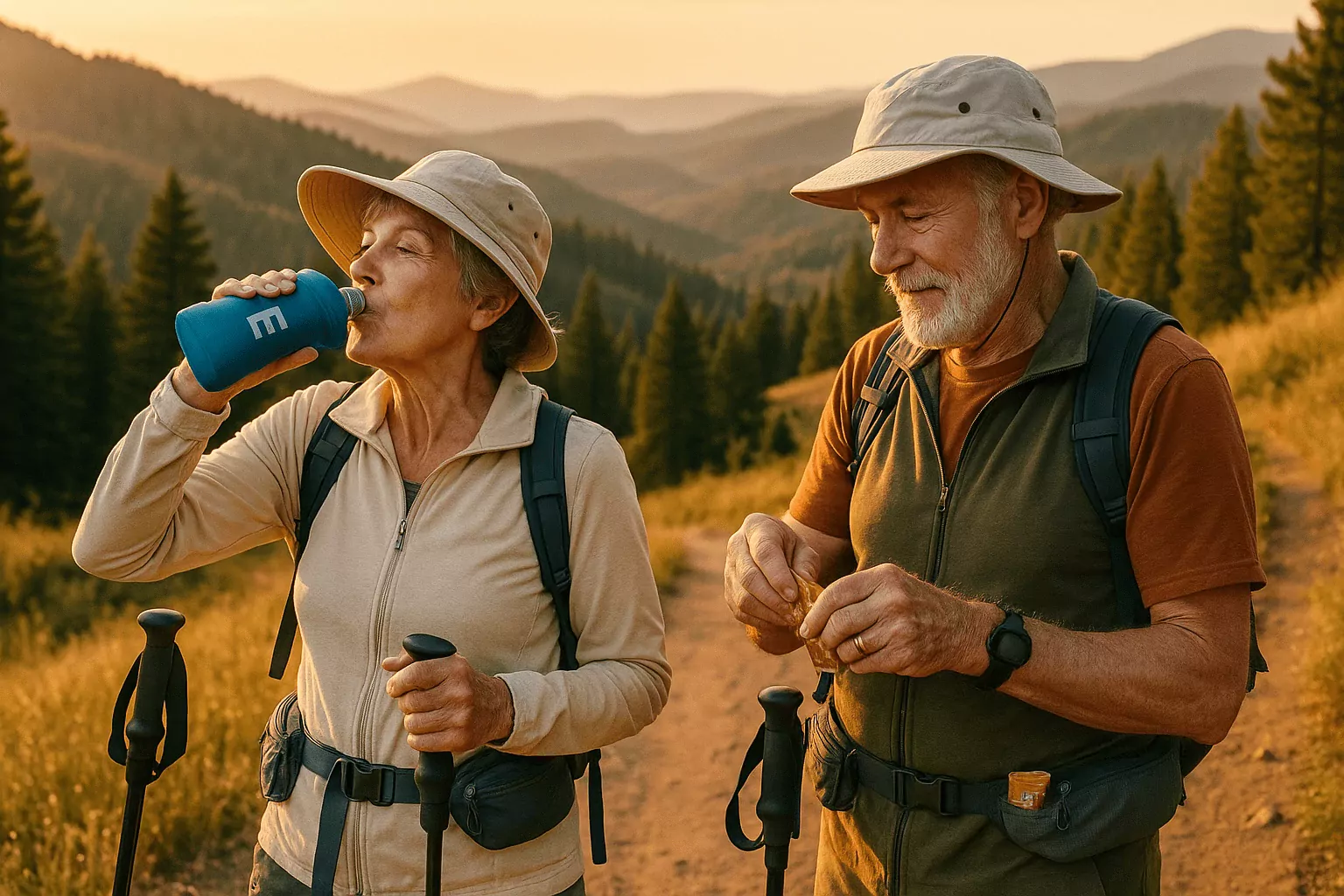
Consistent sipping beats big gulps, and the right setup makes it automatic. Use two 500-750 ml soft flasks up front for easy access, or a bladder with a magnetic hose clip if you prefer hands-free. Label one flask "E" for electrolytes and the other "W" for water so you can alternate without thinking. Build a simple schedule: three to four sips every 20-30 minutes, more on climbs or in heat. These elderly hikers hydration tips reduce the chance of under-drinking when the trail demands focus.
Pack a small card with hourly targets and attach it to your shoulder strap. Pre-portion electrolyte tablets and snacks in color-coded bags to simplify choices. Stash a lightweight cup for refills at streams if you carry a filter. Review your numbers after each hike and adjust by weather and exertion. This practical rhythm supports electrolyte balance for seniors and makes hydration feel effortless.
Hiking nutrition for seniors: sample menus and packing guide
Plan your day with simple, repeatable menus that hold up in a pack. Morning: Greek yogurt with oats and berries or eggs on whole-grain toast. On-trail: rotate trail snacks for older adults-nut-butter packets, fig bars, cheese sticks, and salted nuts-every 30-45 minutes. Lunch: hummus and turkey wrap with spinach, or quinoa salad with tuna and olives. Evening: salmon, roasted potatoes, and vegetables, or a bean-and-brown-rice bowl with avocado.
Organize your pack so fuel is always within reach. Hip belt pocket: two quick carbs and one salty bite. Shoulder pocket: electrolyte chews or tablets and a small bar. Top lid: backup emergency gel and a lightweight wind layer to keep warm during stops. This layout supports a reliable senior hiking meal plan and keeps decisions fast when the trail gets busy.
Frequently Asked Questions
How many calories should older hikers aim for per hour?
Most older adults do well with 150-250 calories per hour on moderate terrain, trending higher on steep or long climbs. Body size, pace, altitude, and temperature can raise or lower that range. Start at the low end if digestion is sensitive and add small bites as comfort allows. Combine quick carbs with a bit of protein and salt to steady energy and support muscle function. Track how you feel at hours two, three, and four to refine the target. Over several hikes, your personal sweet spot becomes obvious and easier to repeat.
What's the best way to handle cramps and fatigue on hot days?
Address fluids and salts together, because overemphasizing water alone can worsen cramps. Build electrolyte balance for seniors into your plan from the first mile, not after symptoms appear. Aim for steady sodium intake, add potassium-rich snacks like bananas or dried apricots, and consider magnesium in the evening. Slow the pace on exposed climbs and increase sipping frequency by one or two intervals per hour. If cramps hit, pause in shade, gently stretch, and take a salty snack plus a few sips of electrolyte drink. Resume at an easier pace and reassess at the next break.
How should medications and chronic conditions shape fueling plans?
Some blood pressure meds, diuretics, and diabetes therapies affect hydration and glucose, so coordination with your clinician is wise. Bring a concise list of meds and doses in a sealed bag and keep steady access to carbs if you manage blood sugar. Favor predictable foods you've tested on shorter walks to avoid surprises. Keep timing regular-small portions every 30-45 minutes-so energy stays even. Hydration reminders help if thirst is blunted, and electrolyte targets reduce dizziness risks. With planning, hiking nutrition for seniors adapts smoothly to most medical needs.